| |
 |
| |
European Campus is an International Education Consultancy Group
offering its expertise and services to students as well as institutions. |
| |

|
| |
| What does European Campus offer Students ? |
| |
Students benefit from European Campus' expertise and services offerings, such as
enrolment assistance into an accredited program or a university of choice in a selected country,
student visa assistance,
support with scholarship applications,
English language preparation courses
as well as, orientation, travel and accommodation assistance in the selected country.
European Campus sets you on the right path! |
| |
| What does European Campus offer Institutions ? |
| |
Educational institutions will benefit from European Campus' expertise and services in the areas of
student recruitment,
marketing services online as well as educational trade shows representation,
designing, developing and hosting online courses / programs and
assistance with Accreditation processes.
With European Campus' extensive global online presence and expertise
of specific geographical locations, marketing needs of any target group, program or institution
can be addressed.
Portals blogs and websites like www.ArabianCampus.com, www.AustralianCampus.com,
www.AfricanCampus.com, and www.AsiaCampus.com are yours to take advantage of. |
| |
| For further information please contact us via email ... peter@EuropeanCampus.com |
| |
| European Campus - Cookie Policy - May 2018 |
| |
| |
|
| |
|
| |
|
| |
|
| |
|
| |
"It is the supreme art of the teacher
to awaken joy in creative expression and knowledge."
Albert Einstein |
|
| |
|
| |

|
| |
COMENIUS PROGRAM - Lifelong Learning
|
|
Covering pre-schools through to upper secondary schools, the Comenius programme seeks to develop understanding of and between various European cultures through exchanges and co-operation between schools in different countries – these experiences foster personal development, skills and competences, and cultivate the notion of European citizenship. The programme addresses the educational community in its broadest sense, including local authorities, parents associations or teacher training institutes.
Comenius aims to boost the quality of school education, strengthen its European dimension and promote mobility, language learning and greater inclusion. It supports partnerships between schools in thematic fields of common interest and multilateral projects to develop new pedagogical methods or curricula. It also funds education networks, as well as the on- and off-line twinning between schools. More specifically, Comenius has the objective of promoting the participation of at least 3 million pupils in joint educational activities by 2013. It supports transnational mobility (In-Service Training for teachers and other education staff; Comenius Assistantships for future teachers), Comenius School Partnerships and eTwinning, Multilateral Projects and Networks.
|
| |
|
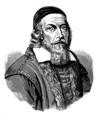
Johann Amos Comenius
Czech-born theologian and philosopher Johann Amos Comenius (1592-1670) was one of the founding fathers of modern education who believed in bringing education to all.
|
| |
|
| |
|
"Education is the most powerful weapon
which you can use to change the world."
Nelson Mandela |
|
| |
|
| |
European Institute of Innovation and Technology (EIT)
|
| |
The Commission welcomes political agreement on the proposal establishing the European Institute of Innovation and Technology (EIT) and on its financing.
|
| xxx |
The EIT will contribute to bridge the innovation gap between the EU and its major competitors by promoting further the integration of the three sides of the knowledge triangle in a mutually-supportive manner and providing a world-class innovation-oriented critical mass at the EU level. In particular, the EIT will facilitate innovation partnerships, translate research and technological results into business opportunities, promote entrepreneurial initiatives, and enrich higher education through the most up-to-date, directly applicable knowledge.
To achieve its mission the EIT will set up excellence-driven innovation partnerships in critical areas between all actors involved in the knowledge triangle. Such an initiative would offer European companies a new relationship with education and research.
Furthermore, the EIT will seek to become a symbol of the integrated European Innovation, Research and Education Area, as well as a reference model that will inspire and drive change in existing education and research institutions in the EU.
Source: Europa
- Education & Training
|
| |
|
| |
"That is
what learning is.
You suddenly understand
something
you've understood all your life,
but in a new way."
Doris Lessing |
|
| |
|
| |
| |
LEONARDO
DA VINCI
|
|
|
The
Leonardo Da Vinci programme,
Pillar of Lifelong Learning
In today's economic climate Europe is facing
a twofold challenge.
First, there is a need to
prepare European citizens better for entering
the labour market, thereby reducing the number
of unemployed.
Second, companies need a skilled
workforce to cope with rapid scientific and technological
changes in an increasingly competitive world.
To meet this challenge the European Commission's
Leonardo
da Vinci programme serves as a laboratory
of innovation in the field of lifelong learning.
|
Following
its initial
phase, from 1995 to 1999, the Community's Leonardo
da Vinci vocational training programme is now in
its second phase, covering the seven-year period
from 2000 to 2006. The programme promotes transnational
projects based on co-operation between the various
players in vocational training - training bodies,
vocational schools, universities, businesses, chambers
of commerce, etc. - in an effort to increase mobility,
to foster innovation and to improve the quality
of training. The Leonardo da Vinci programme aims
at helping people improve their skills throughout
their lives.
Community funds for the first phase of the programme
amounted to € 793.8 million, approximately
40% of which was used for mobility projects. This
meant that from the end of 1995 to early 2001
about 125 000 people received a grant for a work-related
stay abroad. In addition, a total of over 3 000
pilot and other projects were funded producing
an eclectic range of training products in a variety
of media. Funding has increased in the second
phase and in the year 2001 around 38 000 people
benefited from a Leonardo da Vinci grant. The
budget for the second phase is just under €
1.4 billion and the programme is open to 31 countries.
It is now necessary to build on the achievements
of the first phase of the Leonardo da Vinci programme
in order to ensure its continued success and make
it even more relevant to today's individual and
society. The Leonardo da Vinci programme is a
key instrument in the drive to implement lifelong
learning strategies that offer synergies between
European policies for training and employment.
Source: EU Directorate-General for
Education and Culture
|
| |
|
| |
"Insanity
is doing the same things over and over again
and expecting different results."
Albert Einstein |
|
| |
| |
"If you
can change your mind,
you can change the
world."
Joey Reimer Creativity Guru |
|
| |
|
| |